A Pre-Winter Heating Service Checklist for Canberra Property Owners
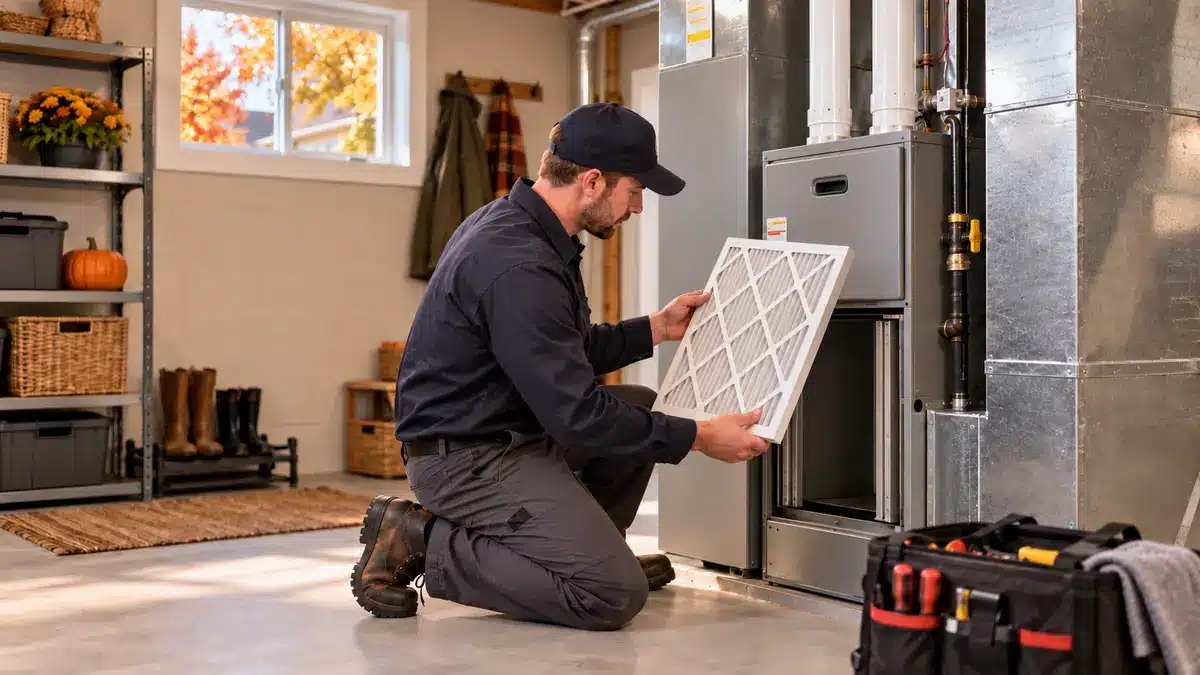
Gas heaters in Canberra sit idle through autumn and then get asked for full output on a freezing morning. That stop-start pattern is hard on ducted gas heating, and it tends to expose faults at the worst time. A planned pre-winter check splits the work sensibly between owner preparation and a visit from a licensed technician.
Book before demand peaks
Canberra frosts arrive fast, and overnight lows can drop owners straight into heating season without much warning. Many ducted systems have sat unused for months by that point. Dust has settled in return-air paths, and batteries in controllers are low. A damper that stuck last winter is still stuck.
That timing creates the same rush every year.
Everyone calls in the same cold week. Calendars fill and after-hours rates apply. A fault that could have been picked up in March or April becomes an urgent job in June or July.
Booking three to six weeks before steady cold sets in gives owners more choice of appointment times. It also gives the technician daylight and time to work through the full list without pressure.
If parts are needed, there is still time to source them before nights turn truly cold. There’s no promise that early booking stops every breakdown. Mechanical parts can still fail without warning.
Early attention does mean faults noticed during normal use get logged sooner. Parts can be discussed calmly and alternative heating plans can be made if a repair takes time. Owners who rent out property feel this timing pressure twice. A heater that struggles on tenant move-in day creates stress for both sides.
Treat the service as a safety check first
Annual servicing for ducted gas heating is about safety before savings. A heat exchanger can develop cracks with age and heat cycles. A flue can become partly blocked after months without use. Either condition can allow combustion products to spill where they should not go. Carbon monoxide has no color or smell. Occupants can’t detect it without an alarm or test instrument.
Symptoms sometimes linked to exposure include headache, nausea, dizziness, and tiredness. If anyone feels unwell and gas heating is suspected, move to fresh air at once and seek emergency medical help. Don’t stay inside to run checks. Don’t approach a damaged unit or keep restarting it to see what happens.
A licensed gas technician has the instruments to test for carbon monoxide and the training to interpret the result. Home carbon monoxide alarms can add awareness between visits, but they don’t replace inspection of the heat exchanger and venting. Owners should not remove covers or probe flueways to look for cracks. That inspection needs specific tools and shutdown procedures.
The right owner action is to keep the area around the heater clear. Note any soot marks or odd smells noticed during normal use from a safe distance. If there are signs of damage, switch the system off and arrange a service call. Ventilation openings sized for the heater should never be blocked. Furniture and stored boxes can restrict air movement and trap heat where it should not build up.
Pull together system information before the visit
Technicians work faster with good background. Before booking, pull the manual for the ducted unit and the thermostat. Note the brand and model number shown on the indoor unit label or in the paperwork, along with the install date if it is known. Snap a clear photo of the rating plate only if it can be reached without steps or tools and without removing any cover. Don’t climb into the roof space or pull off panels to get it.
Write down service history in plain terms. Include when the last professional clean and test was done and what was adjusted or replaced. Note whether any rooms never warm up properly or the system was noisy during normal use last winter. Short notes help more than guesses. The technician can then decide what to inspect closely and what questions to ask.
Know the star rating on the unit or in the brochure if that detail is available. The rating doesn’t diagnose a fault, but it gives context for later talks about running costs. If the manual lists user-level filter care, follow those steps exactly. Different brands place latches and switches in different spots, so generic online advice can mislead. If the manual is missing, ask the booking office what to have ready and don’t touch internal parts in the meantime.
What a full professional service covers
A full visit includes checks of gas supply safety, air movement, controls, and venting, beyond a quick vacuum and a glance at the flame. Gas pressure is checked with gauges to confirm the burner gets a steady supply within maker limits. Ignition is tested for reliable startup, and burner condition is inspected. Heat exchanger surfaces are examined for signs that need further testing. Flue and venting are checked for clearance and sound connection. Carbon monoxide testing is done with calibrated instruments under defined conditions.
Canberra owners searching for Boiler Maintenance Canberra can cover those gas-side tasks by booking through a licensed local specialist whose ducted gas heating team works on warm-air systems rather than hydronic boiler water circuits.
Ask what is included before work starts. Does the visit cover carbon monoxide testing, heat exchanger inspection and flue checks? Ask about filter advice per the maker manual and thermostat checks, and whether zone operation will be tested too. Clear answers help owners compare like with like. Keep children and pets clear while tests run. Don’t hover over open compartments, as the technician needs space to use meters safely.
Ask to be shown controller settings that suit the household routine. Night setback and fan modes are often left at defaults that don’t match how rooms get used. Small setting changes explained during the visit can lift comfort without touching gas parts. Request a written summary of findings and any follow-up suggested, with model numbers noted for future quotes.
Stick to safe external observations at home
Owner checks should stay on the outside. No panel needs to come off, and no flue joint needs to be touched. The aim is to record what can be seen safely at floor level and pass it on.
Start with the controller. Check whether the display is clear and responsive and programmed times are still correct after power cuts over summer. Note any error codes shown without trying to reset faults repeatedly. A photo of the screen helps the office match parts or manuals before arrival.
Check that supply vents in living areas and bedrooms are open to the room and not hidden behind heavy drapes or large furniture moved during summer. Return-air grilles can collect a visible layer of household dust. Whether they can be wiped or need a specific maker step depends on the model, so follow the manual rather than general videos.
Walk outside only as far as can be done safely from the ground. Note from a distance whether the flue terminal looks damaged or out of place. Don’t climb ladders or poke at terminals. Record the observation and leave clearing and testing to licensed help. Inside, note rooms that felt cold last season during ordinary use and whether doors were usually open or shut. Those notes point the technician toward zones and ducts that need closer testing. If the manual describes a user filter step, follow it exactly and stop if anything resists. Normal observations are enough.
Zones, thermostat settings and ductwork need attention too
Uneven warmth often traces back to controls and air paths rather than the heater itself. Ducted gas heating warms air in one central unit and pushes it through insulated runs to each outlet. If that air leaks or goes to the wrong rooms, comfort drops while gas use stays high. Reviewing the home’s bills alongside service findings can help identify whether long run times or uneven distribution deserve closer investigation, without assuming a particular saving from maintenance.
Zoning dampers decide which parts of the house receive warm air. A damper can stick after months without movement. The result is warm spare rooms and cool bedrooms. Owners can note which zones were set and which rooms felt different, along with door positions at the time. Actual damper testing needs access to roof or floor areas and live controls, so it sits with the technician. Ask that every zone be cycled and its operation tested during the visit.
Thermostats cause similar confusion when readings drift. A controller in a sunny hall or near a kitchen may read high. A flat battery display or loose wall mount may read low. Short run times followed by quick restarts, or long runs that overshoot the set point, are worth noting as observed patterns without trying to recalibrate. Calibration needs reference thermometers and maker procedures.
Runs can sag and insulation can slip. A visual check from accessible rooms gives little indication of their condition, so ask the technician about duct condition and insulation gaps found during service.
Weigh repair quotes against replacement options
If the report lists a failed part, ask for options in writing. The quote should explain what the repair covers and what warranty applies to parts and labor. Ask what running-cost difference a higher-star replacement might bring for a system sized to the property. That side-by-side view helps owners weigh a short-term fix against longer-term use, without assuming any set age forces replacement.
Sizing matters more than brochure output. A unit too large for well-sealed rooms can cycle and annoy. A unit too small for sprawling floor plans can run long and still leave corners cool. Insulation, ceiling height, window coverings, and door habits all shape the load. Ask how the existing size matches current use before discussing any change. Don’t accept pressure to decide on the spot. Take time to review the written quote and check manual terms for warranty transfer or service intervals.
Landlords and managers should file every invoice with the date and scope shown. Schedule checks between tenancies where possible so new occupants start with tested heating. Share controller basics at handover and note who to call if the unit locks out or an alarm sounds. Pre-winter planning won’t catch everything, but it brings owner notes and technician tests together before cold nights demand full heat. Cold mornings test every weak link. A calm autumn booking leaves room to think. Keep manuals where they can be found next year.