What You Need to Know About Refrigerator Temperatures
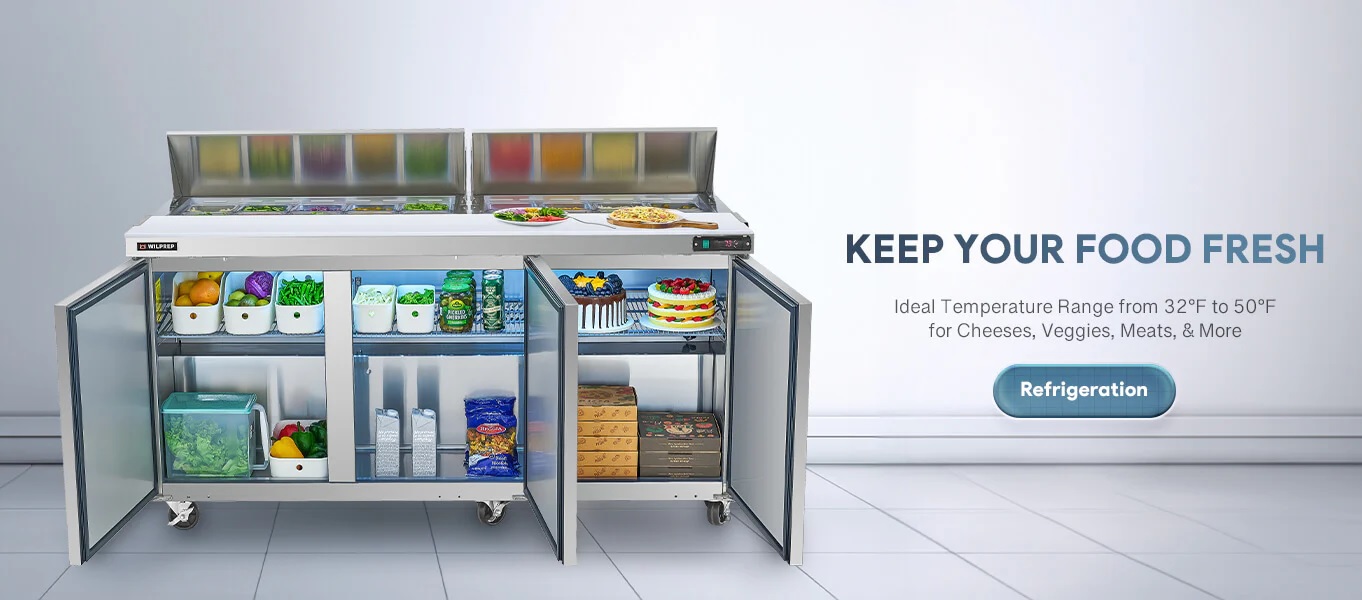
In a professional kitchen, the difference between 37°F and 42°F isn’t just a few degrees—it’s the difference between a crisp, fresh salad and a visit from the health inspector.
Whether you are running a high-volume restaurant or a boutique bakery, mastering your Wilprep refrigerator’s temperature is the most effective way to protect your inventory and your customers. Here is everything you need to know about staying in the “Safety Zone.”
1. The “Danger Zone”: Your Number One Enemy
Food safety experts and the FDA are very clear about the Danger Zone: the temperature range between 40°F and 140°F.
-
The Risk: In this range, bacteria can double in number in as little as 20 minutes.
-
The Goal: Your commercial refrigerator should always be set to keep food below 40°F. At Wilprep, we recommend a “sweet spot” of 36°F to 38°F. This provides a safety buffer without accidentally freezing your delicate produce.
2. Reach-In vs. Prep Table: Not All Cold is Equal
Different units have different jobs, and their temperatures should reflect that:
-
Reach-In Refrigerators: These are for long-term storage. Aim for 35°F–38°F.
-
Prep Tables: Because these have open tops (the rails where your pans sit), they fight against the kitchen’s ambient heat. Ensure your prep table is holding the internal food temperature at 41°F or lower, even during a busy lunch rush.
-
Freezers: For long-term preservation and food safety, your commercial freezer should be rock-solid at 0°F to -10°F.
3. Why Your Display Might Be “Lying” To You
Most modern refrigerators, including Wilprep models, feature a digital external display. While these are highly accurate, they measure the air temperature near the sensor.
-
The Reality: Air temperature fluctuates every time the door opens. What matters most is the product temperature.
-
The Fix: Place a secondary manual thermometer in a glass of water inside the fridge. This mimics the internal temperature of your food and gives you a more stable, “true” reading.
4. Factors That Mess With Your Temp
If you notice your numbers creeping up, it’s usually one of these three culprits:
-
Overcrowding: If you stack boxes so tightly that air cannot circulate, you create “hot spots.” Airflow is the secret to consistent cooling.
-
Dirty Condenser Coils: If the coils (the “lungs” of your fridge) are covered in dust and grease, the compressor has to work twice as hard to shed heat. A quick monthly cleaning can drop your internal temp by several degrees.
-
Frost Buildup: If your door gaskets are torn, humid kitchen air enters the unit and turns into ice on the evaporator coils, “choking” the cooling power.
5. The “Golden Rule” of Loading
To maintain a perfect temperature, never put piping hot soup or large roasts directly into the fridge. This creates a “heat bloom” that can raise the temperature of everything else in the unit, putting your entire inventory at risk. Always use an ice bath or a blast chiller to bring items down to 70°F before they hit the reach-in.
Master Your Kitchen’s Climate
At Wilprep, we equip our units with Embraco compressors and high-precision digital controllers to make temperature management as “set it and forget it” as possible. But remember: technology is the tool, but you are the chef. Regular monitoring is the key to a safe kitchen.