Can Your Electrical Panel Handle That New EV Charger or Hot Tub? A Homeowner’s Capacity Check
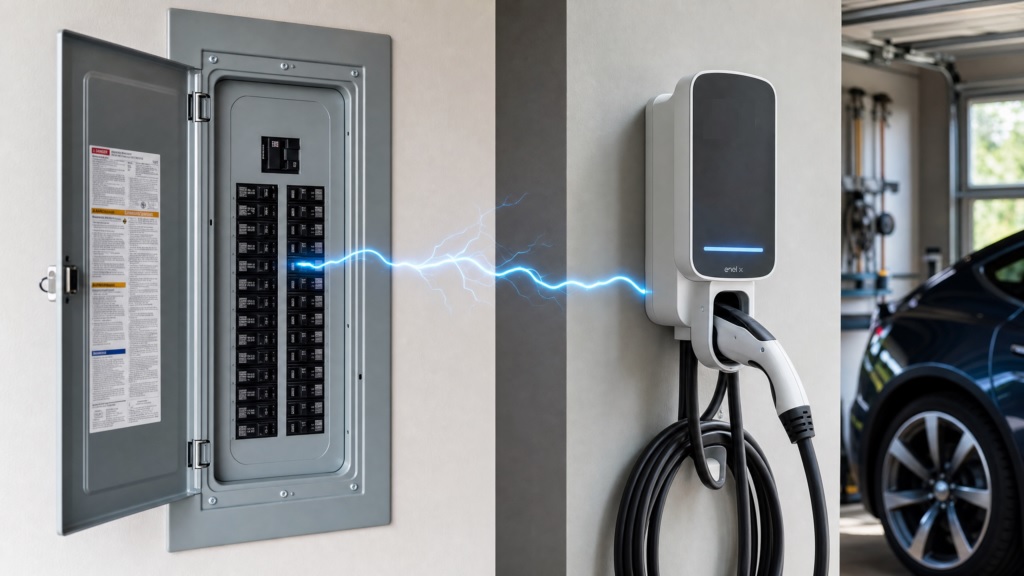
If you don’t check capacity first, adding a high-draw appliance, such as a Level 2 EV charger, backyard spa, sauna, or ductless mini-split, can strain a home’s existing electrical system. Hot breakers, nuisance trips, or dimming lights can signal that a new circuit is overtaxing the system. Before buying equipment or pulling cable, make a simple plan: Figure out the load you are adding, check your main breaker and panel bus rating, account for conductor length and voltage drop, then decide between a dedicated circuit, managed load controls, or a panel upgrade.
-
Identify the Load You’re Adding: EV Charger, Hot Tub, or Mini Split
Check the equipment nameplate or manual. Note the voltage (120 or 240 volts), full-load amperage, and whether that load is going to be continuous. EV charging is usually a continuous load, meaning it can last longer than three hours, so size the circuit at 125% of the charger’s current. Many 240-volt EVSEs are adjustable to 24, 32, 40, or 48 amps. A spa usually needs 240 volts at 40 to 60 amps with a GFCI. A ductless mini-split can use 10 to 25 amps and needs an outdoor disconnect.
If the ratings aren’t clear, photograph the label and have a licensed electrician verify the working current and continuous-load status. They can also tell you whether the device needs a dedicated circuit, a special receptacle such as a NEMA 14-50, or a hardwired connection. A local pro, such as Forefront Electric, can also match wire gauge to breaker size and distance. So a 40-amp charger can run on a 50-amp breaker with appropriately sized copper or aluminum conductors.
-
Can Your Panel and Service Support It? Quick Capacity Reality Check
Check the main breaker rating on your service panel door, usually 100, 125, 150, or 200 amps. That rating, along with the panel bus bar rating and service conductors, is the ceiling on what your home can deliver. Capacity is not just space. Tandem breakers give you more spaces but not more amps, and double-lugging a breaker is dangerous. A proper load calculation accounts for existing large draws such as an electric range, dryer, water heater, heat pump, and well pump, then applies demand factors. Warm breaker faces, frequent trips during normal use, or lights dimming when a microwave starts indicate a system already at or near its limits.
-
Choose a Route: Dedicated Circuit, Load Management, or Panel Upgrade
You can do many projects with a new dedicated circuit from the main panel or a nearby subpanel. Choose the wire size and run length to manage voltage drop. For example, if you have a long run to a wall-mounted EVSE in your garage, use a bigger wire. Pick the right wiring method: NM B in dry interior walls, THHN in conduit for garages and exterior runs, and wet-location fittings where they may be exposed. Managed charging is a handy bridge in tight capacity situations. Smart EVSE can cut the current at night to 24-32 amps, split the load between 2 chargers, or pause when a range or dryer is active. The trade-off is charging speed vs. avoiding a full service or panel upgrade. If you plan multiple electrified loads, a 200-amp service and panel upgrade may be the cleaner long-term path, but plan for utility coordination and permitting lead time.
-
Safety and Code Triggers You Should Expect
Several plug-ins call for protection requirements. Spas and hot tubs normally require a GFCI-protected feeder, an outdoor service disconnect within sight, and bonding of all nearby metal parts to an equipotential grid. Include proper working clearances in charger installations, and GFCI protection may be required for EV circuits. Laundry areas and bathrooms require GFCI. New branch circuits in habitable rooms generally require AFCI protection. Multiwire branch circuits require a 2-pole breaker or handle tie. Use in-use covers on receptacles, weatherproof boxes, and proper burial depths for outdoor underground feeders. Keep conductors away from overhead spa areas. Follow manufacturer clearances for mini-split outdoor units. Schedule permits and inspections to verify terminations, conduit, and grounding before close-up.
Two Scenarios That Show the Tradeoffs
Adding an EV to a 1960s home with a 100-amp main breaker, a gas furnace, and an electric dryer. The homeowner wants a 50-amp charger, but a quick load check shows limited headroom during dinner time when the oven and dryer are running. A practical solution is a 240-volt Level 2 EVSE set at 24 to 30 amps on a dedicated 10 AWG copper circuit scheduled to charge after 10 p.m. A smart charger that pauses when the dryer starts keeps the main from getting close to its limit without sacrificing overnight range recovery. If you’re planning for induction cooking and a heat pump water heater, plan for a 200-amp service upgrade.
Another homeowner is putting in a 240-volt, 50-amp spa 60 feet from the panel. The run is PVC conduit with individual THHN conductors. GFCI breaker in spa subpanel; outdoor disconnect within sight. The conductors are upsized to minimize voltage drop and maintain steady heater performance. All metal rails and adjacent equipment are bonded. The area’s serving receptacle has an in-use cover. The spa is on its own dedicated circuit, which is clearly marked to prevent accidental tie-ins that could overload the feeder.
Before you plug in that charger, spa, or mini split, find out the actual amperage and whether the load is continuous, and compare it to your main breaker rating, panel bus capacity, and the condition of your service conductors. If you are electrifying multiple systems, choose a dedicated circuit, managed charging, a subpanel for cleaner routing, or a full panel and service upgrade. Use the proper wiring method, GFCI or AFCI protection when required, and a local permit and inspection so they can check disconnects, grounding, and labeling. A good capacity check up front will save nuisance trips, protect equipment, and leave room for the next improvement.